
Ceramic Coating Maintenance: How to Keep Your Coating Performing at Its Best
Ceramic Coating Maintenance: How to Keep Your Coating Performing at Its Best
You've invested in professional ceramic coating for your vehicle, and the results are stunning: deep gloss, extreme water beading, and a finish that seems to repel everything. But ceramic coating isn't a set-it-and-forget-it solution. While it dramatically reduces maintenance effort compared to traditional wax or sealant, proper care is still necessary to get the most out of your investment. This guide covers everything you need to know about maintaining your ceramic-coated vehicle to ensure peak performance for years.
Understanding How Ceramic Coatings Work
To maintain your coating properly, it helps to understand what it does and how it can be compromised.
What Your Coating Does
Ceramic coating creates a semi-permanent chemical bond with your vehicle's clear coat. This bond produces a surface with several key properties:
Hydrophobic behavior: Water beads tightly and sheets off, carrying dirt and contaminants with it. This is the most visible performance indicator of a healthy coating.
Chemical resistance: The coating resists etching from acidic contaminants like bird droppings, bug splatter, and tree sap far better than unprotected clear coat.
UV protection: The coating absorbs and deflects ultraviolet radiation that would otherwise degrade the paint beneath.
Hardness: Ceramic coatings add a hard layer (typically 9H pencil hardness) that resists light scratching and swirl marks better than clear coat alone.
What Can Degrade Your Coating
Despite its durability, ceramic coating can be compromised by:
- Harsh chemicals including strong alkaline or acidic cleaners
- Abrasive contact from automated car wash brushes or rough towels
- Prolonged exposure to contaminants left on the surface
- Mineral deposits from hard water that etch over time
- Neglect -- even the best coating suffers without basic care
The Foundation: Proper Washing Technique
Washing is the single most important maintenance activity for a ceramic-coated vehicle. Done correctly, it preserves the coating. Done poorly, it can damage both the coating and the paint beneath.
How Often to Wash
General rule: Every two weeks or when visibly dirty.
Adjust based on conditions:
- Weekly during winter salt season
- After long road trips with heavy bug splatter
- Within 24-48 hours of bird dropping or tree sap exposure
- More frequently if parked outdoors under trees
One of the benefits of ceramic coating is that the vehicle stays cleaner longer between washes. You may find that your coated vehicle looks better after two weeks than an uncoated vehicle looks after two days.
The Correct Wash Method
Pre-rinse: Use a pressure washer or strong hose spray to remove loose dirt and debris. This is critical -- rubbing dry dirt into the coating creates micro-scratches over time.
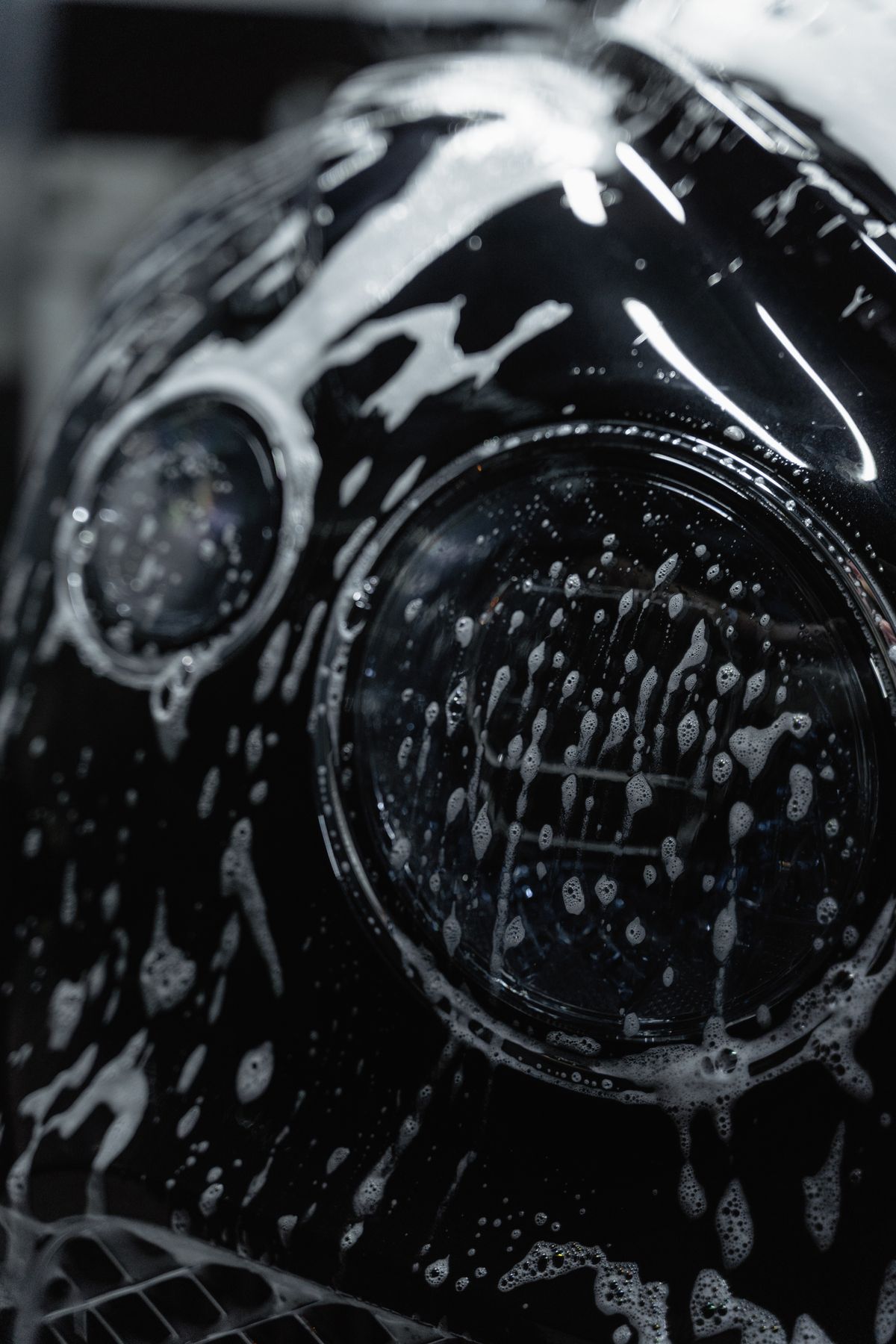
Foam cannon (recommended): Apply a thick layer of pH-neutral car wash foam and let it dwell for 2-3 minutes. The foam lifts and encapsulates dirt particles, allowing the rinse to carry them away without touching the paint.
Contact wash:
- Fill two buckets: one with car wash soap solution, one with clean rinse water
- Dip a clean, high-quality microfiber wash mitt into the soap bucket
- Wash one panel at a time using straight-line motions (not circles)
- Rinse the mitt in the clean water bucket before returning to the soap bucket
- Work from top to bottom, as lower panels carry the most contamination
- Rinse the entire vehicle thoroughly with clean water
Drying:
- Use a clean, high-quality microfiber drying towel (at least 400 GSM)
- Blot rather than drag when possible
- A forced-air blower is ideal for removing water from crevices, mirrors, and badges
- Dry promptly to prevent water spots, especially in areas with hard water
Products to Use
Car wash soap: Use pH-neutral formulas specifically labeled as safe for ceramic coatings. Avoid soaps containing wax or gloss enhancers, as these can leave residue on the coating surface.
Drying aids: A ceramic-safe drying aid or spray sealant can be used during the drying process to add lubrication and boost hydrophobic properties.
Detailing spray: Between washes, a ceramic-safe quick detailer can remove light dust and fingerprints. Spray onto a clean microfiber towel first, then wipe the surface.
Products to Avoid
- Dish soap or household cleaners (too alkaline, strips coating)
- Wax-infused car wash soaps (leave residue that dulls the coating)
- All-purpose cleaners sprayed directly on coated surfaces
- Harsh wheel cleaners on coated wheels (use pH-neutral options)
- Clay bar (only use when specifically directed by your coating installer)
Periodic Maintenance: Boost and Refresh
Beyond regular washing, periodic maintenance treatments keep your coating at peak performance.
Ceramic Boost Sprays
What they are: SiO2-infused spray sealants designed to supplement your existing ceramic coating.
When to apply: Every 2-3 months, or whenever you notice water beading starting to diminish.
How to apply:
- Wash and dry the vehicle first
- Spray the boost product onto one panel at a time
- Spread and level with a clean microfiber towel
- Buff to a streak-free finish with a second clean towel
- Work in the shade or indoors to prevent premature drying
Boost sprays don't replace the ceramic coating underneath -- they add a sacrificial layer of SiO2 on top that refreshes the hydrophobic behavior and adds extra protection. Think of it as topping off the coating rather than reapplying it.
Decontamination Wash
Every 6-12 months, your coated vehicle benefits from a more thorough decontamination wash that goes beyond the standard wash routine.
Iron fallout remover: Spray a pH-neutral iron remover across the vehicle (especially wheels, lower panels, and behind brake areas). Iron particles from brake dust and rail dust embed in the coating surface and cause orange-brown spots. The iron remover dissolves these particles without abrasive contact.
Tar remover: Use a dedicated tar remover for any black spots (road tar) that regular washing doesn't remove. Apply to affected areas, let dwell briefly, then wipe away with a microfiber towel.
Chemical decontamination is generally safer for coated vehicles than mechanical decontamination (clay bar). Only clay bar a coated vehicle if your installer specifically recommends it, as clay can remove coating layers.
Annual Professional Inspection
Many coating manufacturers and installers recommend an annual professional inspection and maintenance detail. This typically includes:
- Assessment of coating condition and performance
- Professional decontamination wash
- Correction of any areas where the coating has worn thin
- Application of a professional-grade topper or refresher
- Inspection for any paint damage beneath the coating
Dealing with Common Issues
Water Spots
Water spots are mineral deposits left when water evaporates on the surface. They're more visible on dark-colored vehicles and can etch into the coating if left untreated.
Prevention:
- Dry your vehicle promptly after washing
- Avoid parking under sprinklers
- Don't let rain sit on the vehicle in hot weather (the sun bakes mineral deposits into the surface)
Removal:
- Fresh water spots: Spray with a dedicated water spot remover, let dwell, then wipe away
- Stubborn water spots: Use a vinegar and water solution (1:1 ratio) on a microfiber towel, then wash and rinse the area
- Severe etched spots: May require professional attention -- don't use abrasive products without consulting your installer
Bird Droppings and Tree Sap
While your ceramic coating resists these contaminants far better than bare clear coat, they can still cause damage if left for extended periods, especially in hot weather.
Immediate action:
- Spray the contaminated area with a detail spray or water to soften the deposit
- Place a wet microfiber towel over the area and let it soak for 2-3 minutes
- Gently wipe away -- don't scrub or scrape
- Wash the area with car wash soap and rinse
Prevention:
- Avoid parking under trees when possible
- Inspect your vehicle daily during peak bird and sap seasons
- Keep a spray bottle of detail spray and microfiber towels in your vehicle for quick removal
Bug Splatter
Highway driving during warm months means bug splatter. Acidic bug residue can etch coating surfaces if left for days.
Best practice: Remove bug splatter within 24-48 hours of exposure. Use a dedicated bug remover spray, let it dwell, then wash normally.
Diminished Water Beading
If your coating's water beading starts to weaken, it doesn't necessarily mean the coating has failed. Common causes include:
- Surface contamination that needs to be washed off
- Mineral deposit buildup from hard water
- Normal wear of the coating's top layer
Solution:
- Perform a thorough decontamination wash
- Apply a ceramic boost spray
- If beading doesn't improve, schedule an annual maintenance appointment
Scratches and Swirl Marks
While ceramic coating provides some scratch resistance, it's not scratch-proof. If you notice new swirl marks or scratches:
- Light swirls may be in the coating layer itself and can be addressed with a light polish during professional maintenance
- Deeper scratches through the coating require professional assessment
- Don't attempt to polish or compound a coated vehicle yourself without guidance from your installer
Seasonal Maintenance Calendar
Spring
- Full decontamination wash to remove winter salt and contaminant buildup
- Iron fallout remover application
- Ceramic boost spray application
- Inspect for any winter damage
Summer
- Regular bi-weekly washing
- Promptly remove bug splatter after highway driving
- Monitor bird droppings and tree sap exposure
- Apply boost spray after decontamination wash if needed
Fall
- Pre-winter decontamination wash
- Ceramic boost spray application for extra protection heading into salt season
- Check and clean wheel wells and undercarriage
- Ensure all trim and rubber seals are protected
Winter
- Weekly washing if roads are salted
- Focus on wheel wells, rocker panels, and lower panels
- Undercarriage rinse with each wash
- Apply boost spray monthly if possible
What Your Coating Warranty Covers
Most professional ceramic coatings come with a manufacturer warranty. Understanding what's covered helps you maintain your coating properly and make claims if needed.
Typically Covered
- Premature coating failure due to product defect
- Loss of hydrophobic properties under normal use and maintenance
- Chemical etching that penetrates the coating layer
Typically NOT Covered
- Damage from improper maintenance (harsh chemicals, automatic car washes)
- Physical damage (rock chips, deep scratches, collision damage)
- Failure to follow recommended maintenance schedule
- Coating applied by uncertified installers
Protecting Your Warranty
- Follow the manufacturer's recommended maintenance schedule
- Use approved or compatible maintenance products
- Keep records of your wash and maintenance routine
- Schedule annual inspections with your certified installer
- Report any issues promptly rather than waiting
When to Have Your Coating Reapplied
Professional ceramic coatings eventually need reapplication. Signs it's time:
- Water no longer beads effectively even after boost spray
- The surface feels rough rather than slick
- Contaminants no longer rinse off easily
- Your installer recommends reapplication during annual inspection
- You've reached the end of the stated durability period
Reapplication typically costs less than the initial application because:
- The vehicle's paint condition is already maintained
- Less (or no) paint correction is needed
- The process is faster with a well-maintained surface
Conclusion
Ceramic coating maintenance is straightforward: wash correctly, use the right products, address contaminants promptly, and perform periodic boost treatments. The effort required is dramatically less than maintaining uncoated paint, but it's not zero.
By following the guidelines in this guide, you'll maximize your coating's lifespan and performance, ensuring your vehicle continues to turn heads with that deep, glossy, water-repelling finish for years.
Ready for a professional maintenance detail or considering ceramic coating for the first time? Contact Perry's Precision Detailing to schedule your appointment. We offer professional ceramic coating installation, annual maintenance services, and expert care for coated vehicles.